Search for Blue Meanie spores and you will find two different organisms. One is Blue Meanie, a named strain of Psilocybe cubensis. The other is Panaeolus cyanescens, a different genus entirely, which is commonly called the Blue Meanie in Australia and across much of the trade. The cubensis line borrowed the nickname; the two are not related.
They are very easy to tell apart under the microscope, which makes this one of the most useful pairs you can hold side by side.
 Restocking
 ISORestocking
 Restocking
 ISORestocking
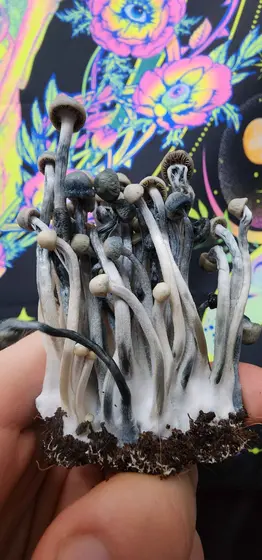 Restocking
In the library today
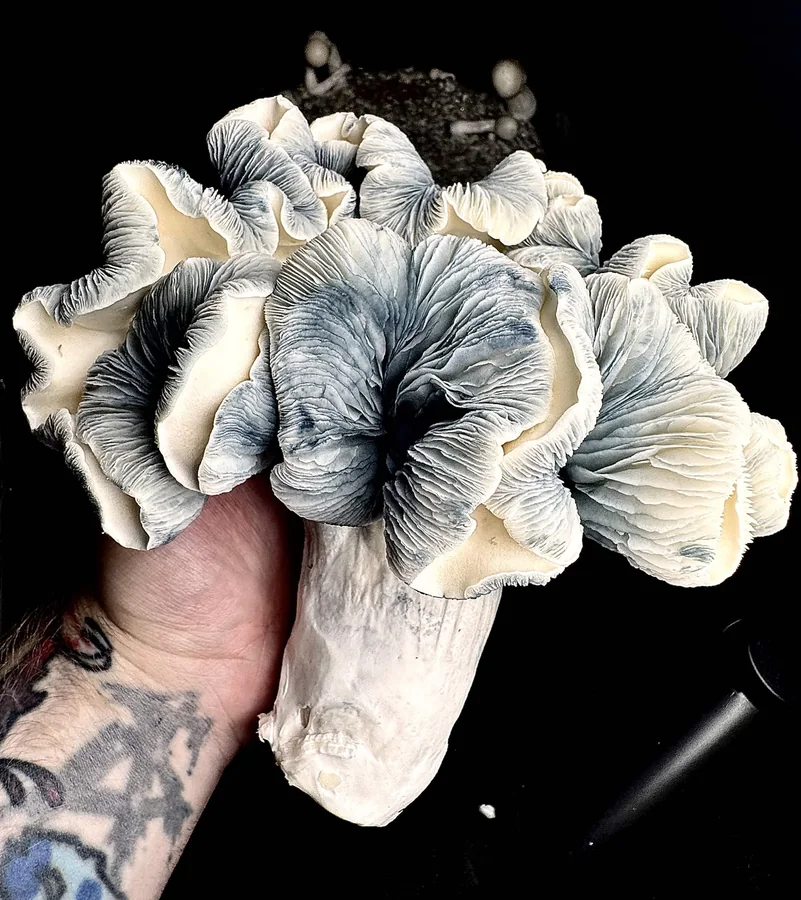 ISO
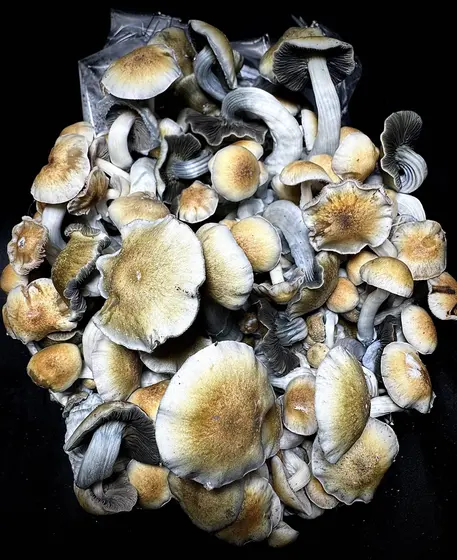 ISO
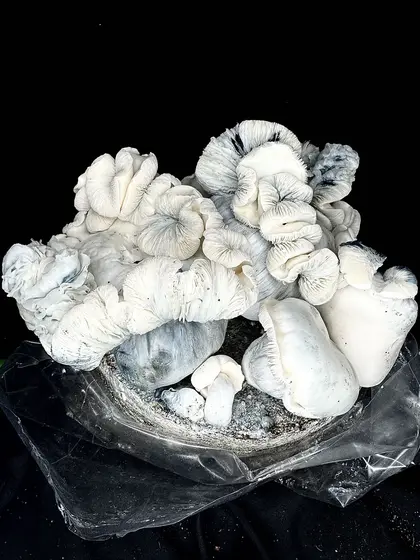 ISO
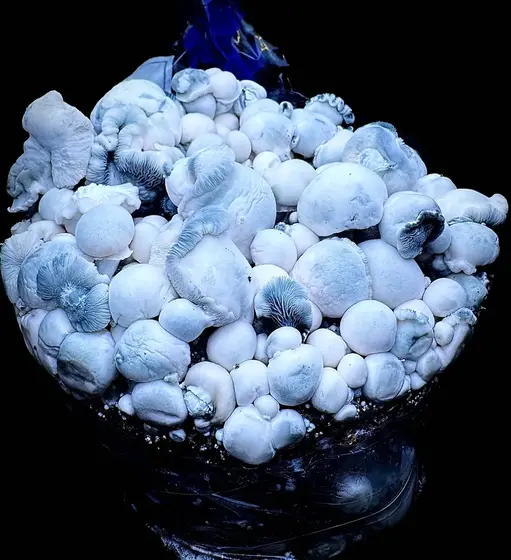 ISO
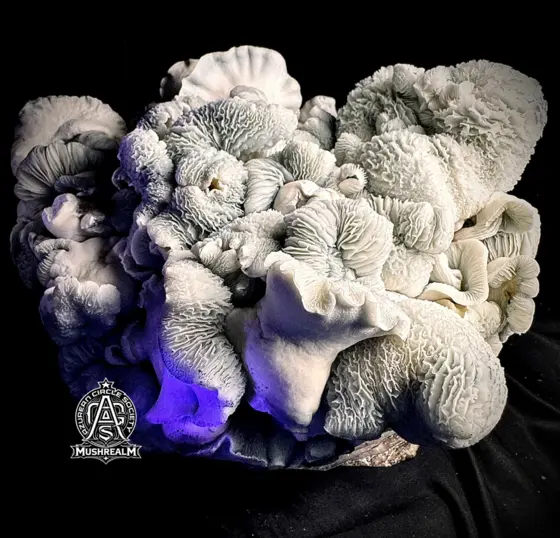 ISO
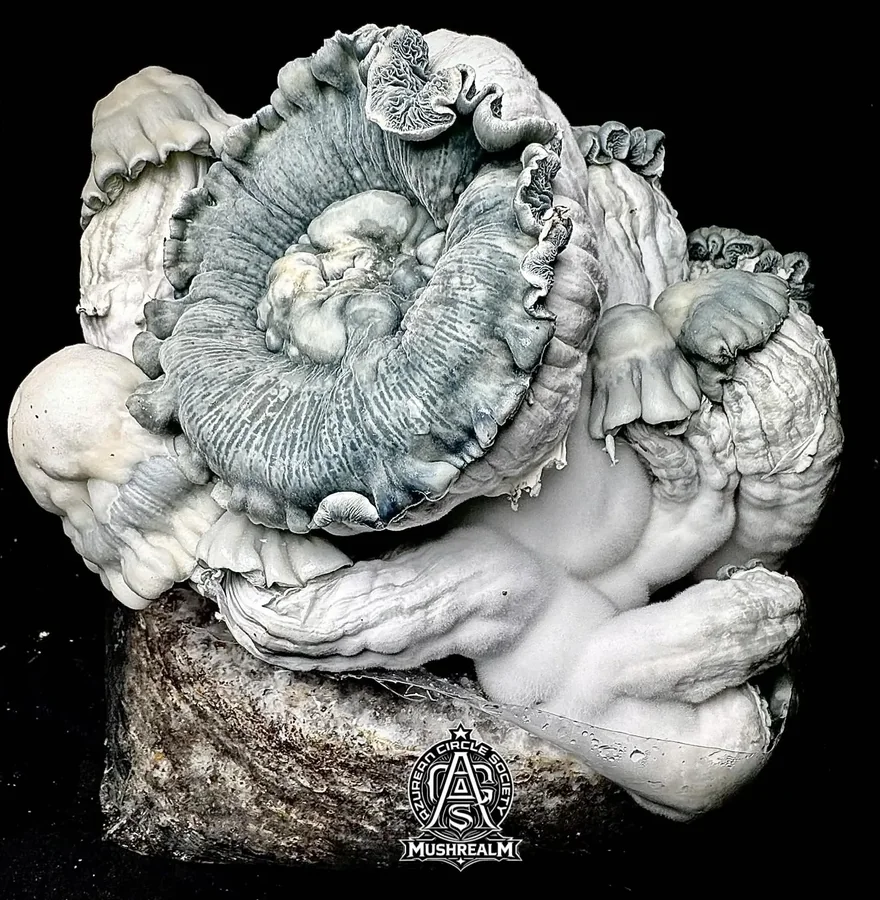 ISO
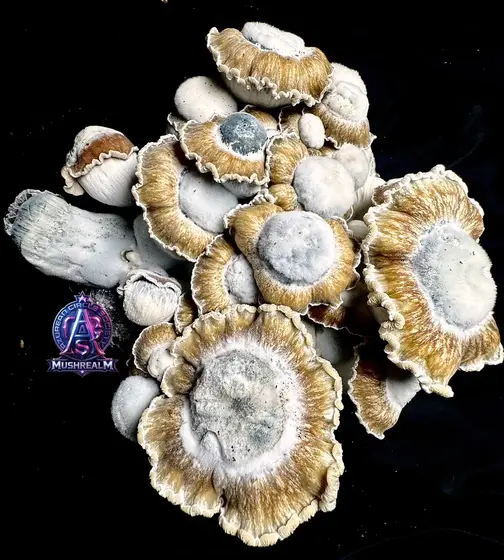 ISO
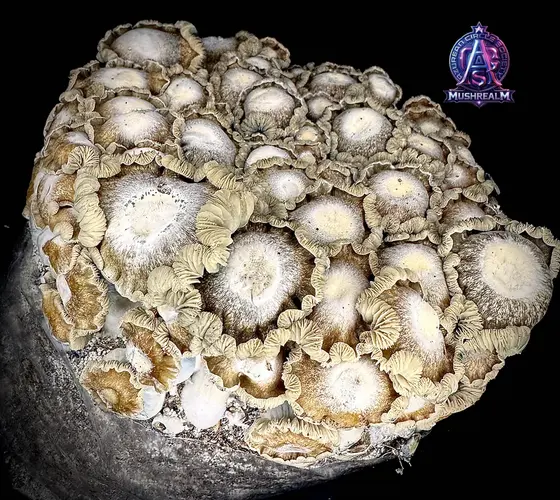 ISO
Telling them apart on the slide
Psilocybe cubensis spores are subellipsoid, thick-walled and roughly 11-17 by 8-11 micrometres, with a germ pore at the apex, and they print a dark purple-brown. Panaeolus cyanescens spores are lemon-shaped in profile, smooth and thick-walled with a broad germ pore, run slightly larger at around 12-15 micrometres, and print jet black.
The print alone separates them: purple-brown against black. Panaeolus also has the mottled gills typical of its genus, because its spores mature unevenly across the gill face. The Panaeolus cyanescens page covers the species in full.
What we carry under the name
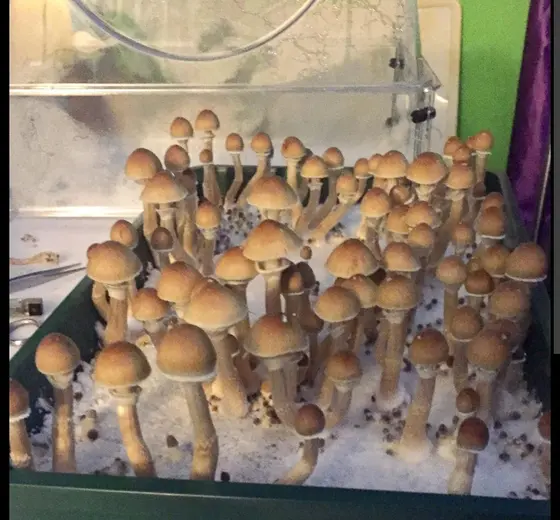
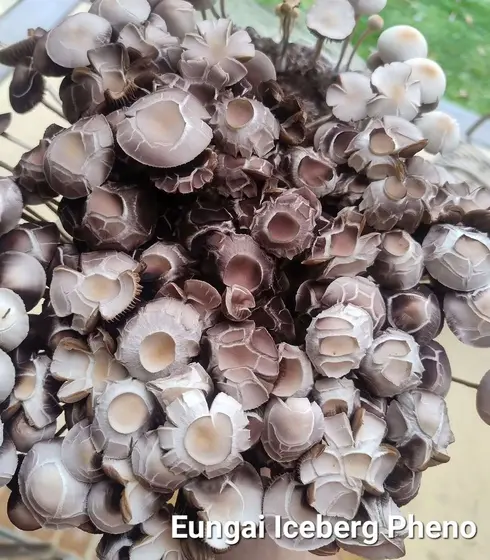
The Blue Meanies cubensis syringe is listed alongside the Pan Cyan isolates, including TTBVI and the Eungai and Byron Bay collections from Australia. Every listing names its species in the first line, so there is no ambiguity once you are on the product page.