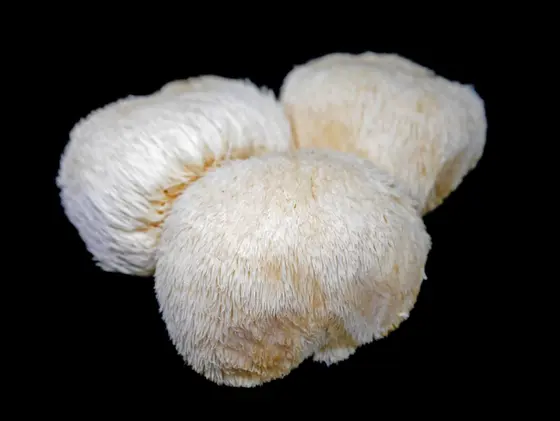
Lion's mane, Hericium erinaceus, is one of the most distinctive edible fungi there is: no cap and no gills, just a cascade of soft white spines. It is a culinary species, legal to grow in the United Kingdom, and unlike the rest of the MycoWorld library our lion's mane culture is sold for cultivation.
A liquid culture is living mycelium suspended in a sterile nutrient solution. Because the mycelium has already germinated, it skips the slow and variable spore stage and is genetically uniform from the start.
 Restocking
About the species
Hericium erinaceus is a wood-decay fungus of broadleaf trees, beech and oak in particular. Wild in Britain it is rare and legally protected: it is listed on Schedule 8 of the Wildlife and Countryside Act 1981, so wild specimens must not be picked. Cultivated lion's mane is the only lawful way to have it in the kitchen.
Under the microscope its spores are small, smooth and almost spherical, around 5-6.5 by 4-5.5 micrometres, and they turn blue-black in Melzer's reagent. The spore print is white, which makes a good contrast with the dark prints of the rest of the library.
Handling and storage
Keep the culture refrigerated and upright, and let it reach room temperature before use. A healthy culture shows white mycelium suspended in clear liquid. Cloudiness, discolouration or any sour smell on opening means it has been compromised and should not be used. Every syringe carries a LOT reference, so a batch can always be traced.
The rest of the gourmet range
Lion's mane sits alongside blue and pink oyster, reishi and turkey tail cultures. The full range is on the liquid culture page, and our syringe vs culture guide explains how a culture differs from spores.