Home / Library / Panaeolus cyanescens spores
Species · Panaeolus cyanescens

Panaeolus cyanescens spores

A different genus, a jet-black spore print, and the Australian collections behind each isolate.

Panaeolus cyanescens is not a Psilocybe at all. It sits in a separate genus, and for anyone doing spore microscopy that is the most useful thing to know about it, because the two are genuinely easy to tell apart on a slide once you know what you are looking for.

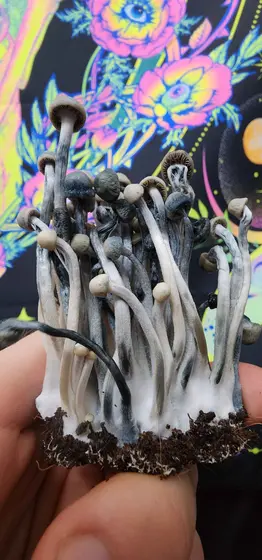
The spore print is jet black rather than the dark purple-brown of cubensis. The spores are lemon-shaped in profile, smooth and thick-walled, with a broad germ pore, and they run slightly larger than cubensis at roughly 12-15 micrometres. Put a cubensis slide and a Pan Cyan slide side by side and the difference in both colour and outline is obvious.
4 catalogued · 0 available now
Pan Cyan Byron Bay iso Spore Syringe 10mlISORestocking
Panaeolus cyanescens · Spore Syringe

Pan Cyan Byron Bay iso Spore Syringe 10ml

£20 /ea
View
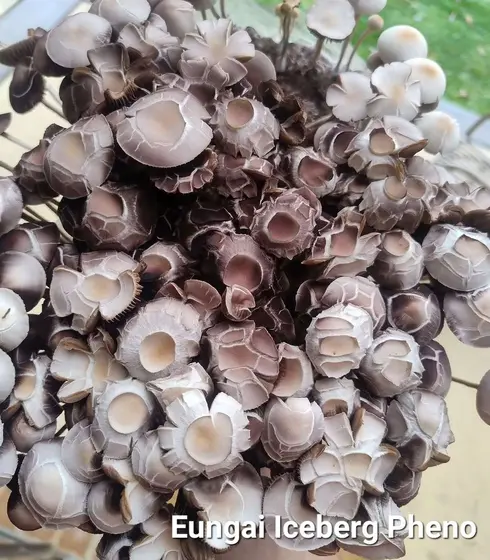
Pan Cyan Eungai ”Iceberg Isolate” Spore Syringe 10mlRestocking
Panaeolus cyanescens · Spore Syringe

Pan Cyan Eungai ”Iceberg Isolate” Spore Syringe 10ml

£20 /ea
View
Pan Cyan Eungai ”Red Spore ” iso Spore Syringe 10mlISORestocking
Panaeolus cyanescens · Spore Syringe

Pan Cyan Eungai ”Red Spore ” iso Spore Syringe 10ml

£20 /ea
View
Pan Cyan TTBVI Spore Syringe 10mlRestocking
Panaeolus cyanescens · Spore Syringe

Pan Cyan TTBVI Spore Syringe 10ml

£20 /ea
View

Blue Meanie means two different things

This causes more confusion than any other name in the trade. In Australia, "Blue Meanie" is the common name for Panaeolus cyanescens. Elsewhere, and particularly in the United States, "Blue Meanie" refers to a Psilocybe cubensis strain that is not this species at all.

Both are real, both are sold under that name, and they are not interchangeable. If you want the Panaeolus, it is on this page. If you want the cubensis strain of the same nickname, it is in the classic cubensis collection. Check the species line on any listing before you buy, here or anywhere else.

Australian collections

The Pan Cyan lines in this library come out of Australian collections: Byron Bay and Eungai in New South Wales, along with the TTBVI line. Where a collection has a named isolate, such as the Eungai Iceberg or Red Spore isolates, it is listed under that name rather than merged into a generic Pan Cyan listing.

Common questions

Frequently asked

Is Panaeolus cyanescens the same as a Psilocybe?
No. Panaeolus is a separate genus. The clearest difference for microscopy is the spore print: jet black in Panaeolus cyanescens against dark purple-brown in Psilocybe cubensis.
What does a Panaeolus cyanescens spore look like?
Lemon-shaped in profile, smooth, thick-walled, with a broad germ pore, and typically around 12-15 micrometres long. They run slightly larger than cubensis spores and print jet black.
Is Blue Meanie a Panaeolus or a cubensis?
Both, depending on who is speaking. In Australia the name refers to Panaeolus cyanescens; elsewhere it commonly refers to a Psilocybe cubensis strain. Always check the species named on the listing.
Are Panaeolus cyanescens spores legal in the UK?
Yes, for microscopy. The spores contain no controlled substance and are not scheduled under the Misuse of Drugs Act 1971.
Keep reading
Microscopy use only. Everything in the MycoWorld library is supplied strictly for microscopy, taxonomy, research and educational study. We do not supply cultivation equipment and we do not provide cultivation guidance. You must be 18 or over. Read the UK law guide.